Renovation
Porcelain vs Ceramic vs Marble for Qatar Homes
Porcelain, ceramic or marble? How each performs in Qatar homes and where each one makes sense.
We install tiles, large-format porcelain, marble and granite on floors, walls and bathrooms, with accurate levelling, even joints and a clean finish.
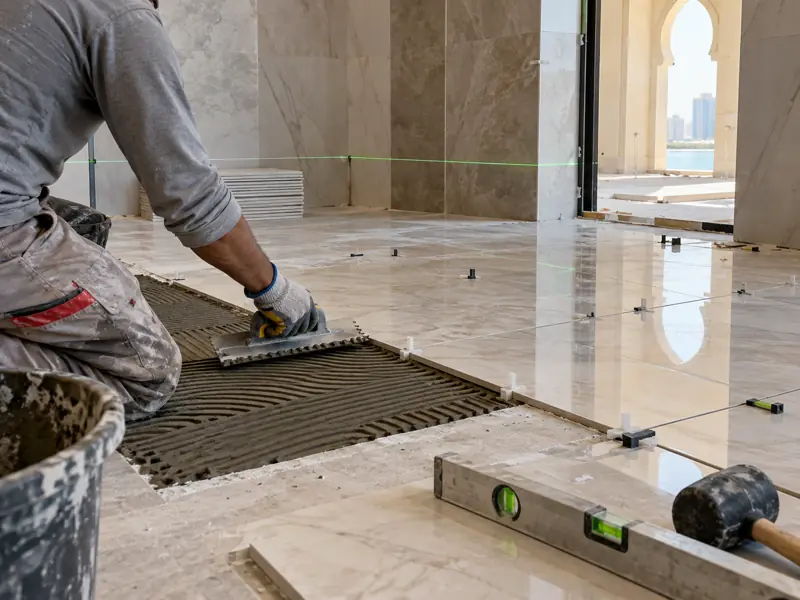
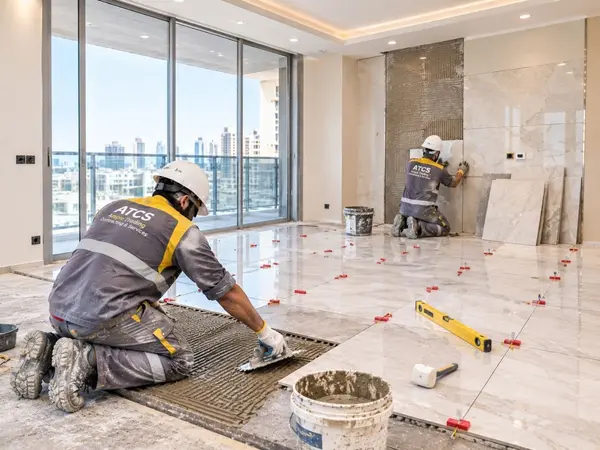
As a tiling contractor working across Doha and Qatar, we know that good tile installation depends almost entirely on preparation: levelling the floor, waterproofing wet areas and choosing the right adhesive for the tile and the surface. That is why every job starts with a free site visit and measurements, so we can see the actual condition of the floor and walls, check for old cracks or moisture, and give a clear quotation before any work starts.
We handle tile installation for new construction and new builds, re-tiling and resurfacing for renovation projects, and smaller maintenance work such as crack repair, grout repair and replacing a handful of damaged tiles to match the existing floor. Whether it is a villa, an apartment, an office or a shop, we can also handle related plumbing, gypsum and painting in the same project so the whole job is finished by one team.
Bathroom tile installation and kitchen tile installation in Doha get particular attention, because these are wet, high-use areas where the wrong preparation shows up quickly as cracked grout, lifting tiles or damp patches. For bathrooms we use water-resistant tiling on the walls and slip-resistant floor tiles that stay safe when wet, and we always waterproof the floor and lower walls before laying the finish tile. For kitchens we install durable floor tiles that handle daily traffic, spills and heat, plus splashback and backsplash tiling behind the sink, hob and counters, sized and set out so the pattern lines up cleanly.
On material, we work with ceramic, porcelain, marble and granite depending on the room and the budget. Porcelain tile is a popular choice in Qatar because it is dense, low-absorption and holds up well to heat and humidity, while marble and granite give a higher-end finish for majlis floors, feature walls and countertops. Because of Qatar's climate and the amount of moisture in bathrooms and kitchens, proper floor levelling and waterproofing before tiling are not optional extras — skipping them is the most common reason tile jobs fail early, with tiles cracking, hollow-sounding or coming loose within a year or two.
Tile work in Doha's high-rise districts comes with its own set of problems. In The Pearl Qatar, many units show handover-stage tiling defects — hollow sounding tiles, slightly uneven lippage or grout lines that were rushed by the original contractor — which we re-level and re-lay rather than patch over. In Lusail, new towers often need backsplash and bathroom tiling finished to a higher standard than the developer's base package, plus balcony and outdoor tiling matched to the building's approved material list. In West Bay, older commercial and residential towers have tiling nearing 15-20 years old, so re-tiling work there usually starts with checking the waterproofing membrane underneath before any new tile goes down, since a failed membrane is the real cause behind recurring cracked or hollow tiles.
In all three areas we transport tile, marble and adhesive through the building's service lift and protect lobbies and corridors during the job, and we confirm tile colour and finish against any material restrictions the building management sets for balconies and common-facing surfaces.
Yes. We regularly re-level hollow or uneven tiles left from the original handover in The Pearl and Lusail, and in older West Bay towers we check the waterproofing membrane behind recurring cracked or hollow tiles before re-tiling, rather than just patching the surface.
Cost depends on the bathroom size, the tile material you choose (ceramic, porcelain or marble), whether old tiles need to be removed, and whether floor levelling and waterproofing are required first. We visit the site, take measurements and give a clear quotation based on the actual scope before any work starts.
Porcelain tiles are denser, less porous and more water- and scratch-resistant than ceramic, which makes them a strong choice for bathroom floors, kitchen floors and high-traffic areas. Ceramic tiles are usually more affordable and work well for walls and lower-traffic spaces. We help you pick the right material for each room and budget.
In some cases we can tile over sound, flat, well-bonded old tiles, but in most renovation jobs we remove the old tiles first to check the floor for cracks or moisture, level the surface properly and, if needed, re-apply a waterproofing membrane before laying new tiles. We confirm the right approach after the site visit.
A standard kitchen floor and backsplash tiling job usually takes two to four days, depending on the kitchen size, whether old tiles are being removed, and whether floor levelling or plumbing and electrical work is needed, though the exact timeline is confirmed after the site visit. Larger kitchens or full re-tiling projects can take longer.
Yes, we install marble and granite flooring, countertops and cladding in villas, majlis areas and apartments across Doha and Qatar, including proper levelling, sealing and polishing for a clean, durable finish.
Yes. For bathrooms, kitchens, balconies and other wet areas we apply a waterproofing membrane on the floor and lower walls before tiling, which protects against leaks and damp in Qatar's climate and is essential for any long-lasting tile installation.
Real photos and videos from Ample Trading projects in Doha and across Qatar.
We're adding real project photos and videos here soon. You can also ask us on WhatsApp to see examples of our work.
Porcelain, ceramic or marble? How each performs in Qatar homes and where each one makes sense.
Why tiles sound hollow, crack or lift in the heat, how they are checked and how to repair them properly.