Call a qualified electrician promptly if you notice a burning smell, scorch marks, sockets or switches that feel warm, breakers that trip repeatedly, lights that flicker or dim when appliances start, buzzing from the board, or mild shocks from appliances or taps. These can signal overloaded circuits, loose connections or failing insulation. In older villas they often appear as air-conditioning and appliance loads grow beyond what the original installation was designed for.
Electrical problems rarely fix themselves, and some get worse quickly. This guide explains common warning signs, what they usually mean, what you can safely do and what must be left to a qualified electrician. It is general information, not a substitute for an on-site inspection.
Signs that need urgent attention
If you see any of these, switch off the affected circuit at the board if it is safe to do so, keep people away, and contact a qualified electrician without delay. If there is smoke or fire, leave the building and call emergency services.
- A burning or hot plastic smell from a socket, switch, light fitting or the distribution board
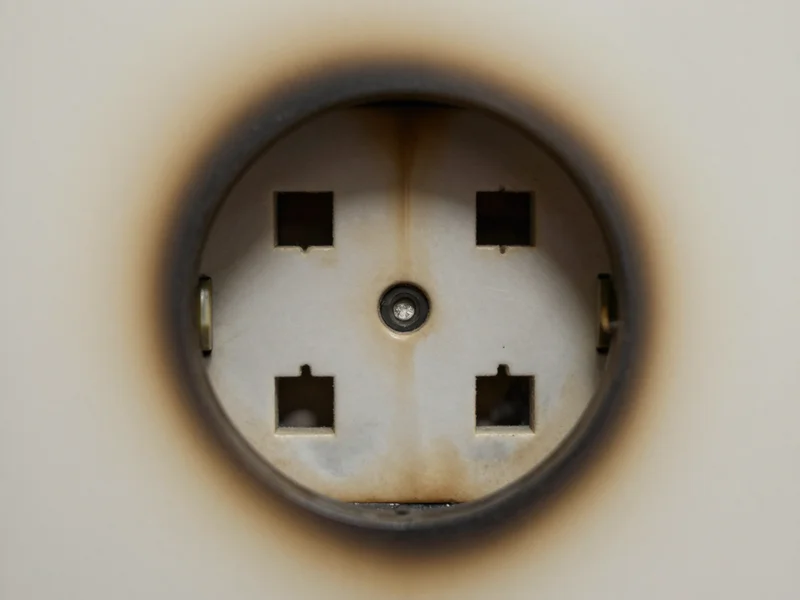
- Scorch marks, melted plastic or sparks at sockets or plugs
- Electric shocks or tingling when touching an appliance, tap or metal fitting
- Smoke or crackling from the board
Warning signs to have checked soon
Breakers that keep tripping
A breaker tripping is a protective device doing its job. Repeated tripping means something is wrong: an overloaded circuit, a faulty appliance, or a wiring fault. An earth-leakage (RCD) breaker tripping can point to moisture or insulation problems. Resetting it again and again without finding the cause is not safe.
Warm sockets, switches or plugs
Sockets and switches should not feel warm. Heat usually means a loose connection or a socket carrying more load than it should, such as a heater or kettle on an adaptor.
Flickering or dimming lights
Occasional flicker can be a bulb or driver. Lights that dim when the AC or a large appliance starts can indicate an overloaded circuit or a poor connection.
Buzzing or humming
A buzzing board, switch or socket can mean loose connections or a failing device.
Too many adaptors and extension leads
If rooms rely on extension leads, there are not enough sockets for how the room is used today. That is a design issue worth fixing.
An old or mixed distribution board
Boards with a mix of old and new breakers, missing labels, signs of heat or no earth-leakage protection deserve inspection.
Why older villas are more at risk
- More load: more AC units, larger kitchens, water heaters, chargers and home offices than the original design anticipated.
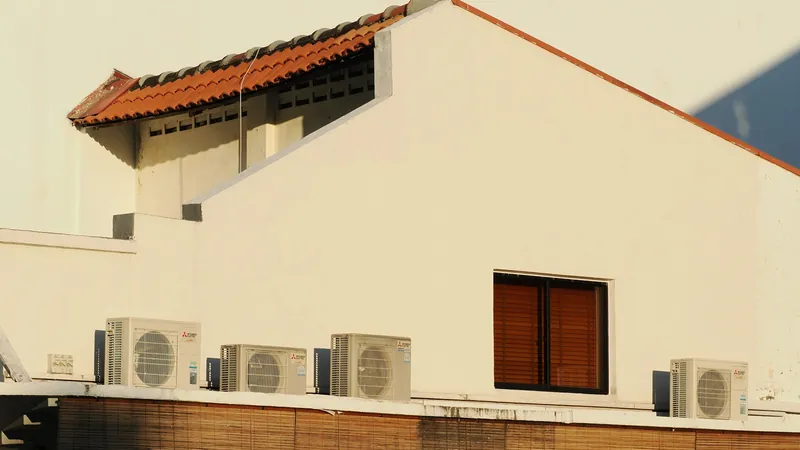
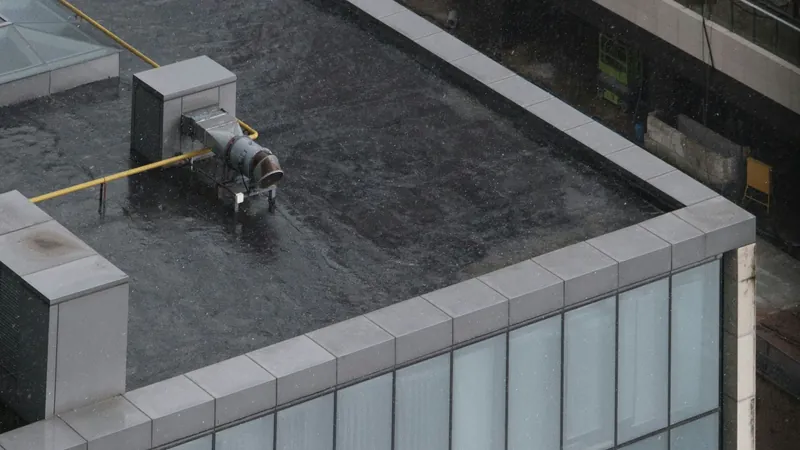
- Heat: high ambient temperatures in roof spaces and on rooftops add stress to cables and equipment.
- Dust: fine dust in boards and outdoor isolators can contribute to tracking and overheating.
- Past alterations: extra circuits or extensions added informally over the years.
- Ageing components: breakers, sockets and connections loosen and wear.
What you can safely do
- Know where your distribution board is and keep it clear and accessible
- Switch off and unplug an appliance that trips a breaker, then call an electrician if the fault persists
- Stop using a socket that is warm, scorched or loose
- Avoid running high-power appliances from adaptors or extension leads
- Use the test button on earth-leakage breakers if your electrician recommends it
- Keep water away from electrical fittings, and report any leaks above lights or boards
Do not open the distribution board, remove covers, or try to repair wiring yourself. Fixed electrical work in Qatar should be carried out by qualified electricians in line with KAHRAMAA's wiring requirements.
What an electrical inspection covers
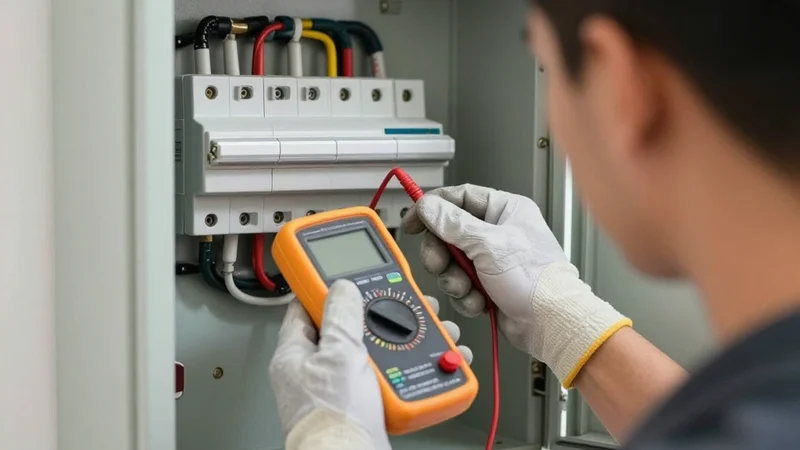
- Visual check of the board, breakers, labelling and signs of overheating
- Testing earth-leakage protection and earthing
- Checking circuit loads against breaker and cable ratings
- Inspecting sockets, switches and fittings for damage and loose connections
- Thermal or load checks on heavily used circuits where needed
- A written list of findings, prioritised by safety
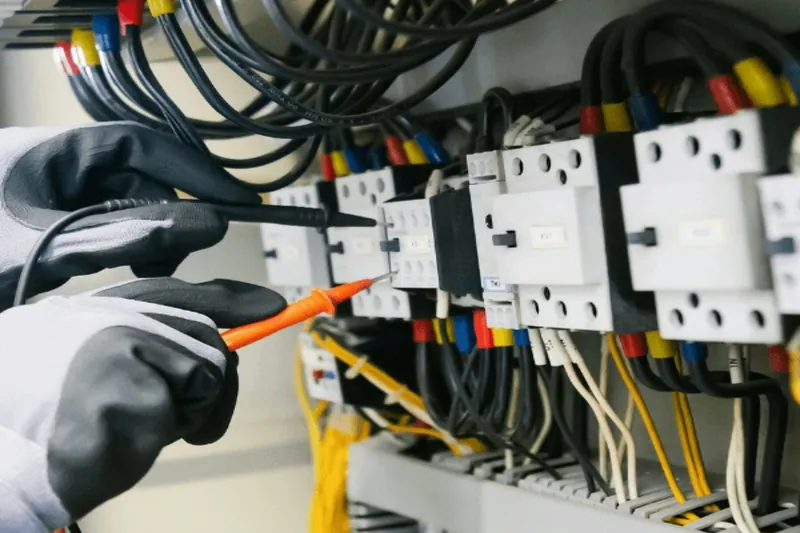
Repair, upgrade or rewire?
| Finding | Typical response |
|---|---|
| A few damaged sockets or loose connections | Local repair and replacement |
| Overloaded circuits | Add or split circuits, rebalance loads |
| Old board without suitable protection | Board upgrade with appropriate protective devices |
| Degraded cables, widespread faults, unsafe past alterations | Partial or full rewiring |
| Need for much more capacity | Load assessment; KAHRAMAA approval may be needed |
Rewiring is disruptive, so if you are already planning a renovation, it is the best time to do it while walls and ceilings are open.
What affects the cost
- The size of the villa and number of circuits
- Whether cables can be pulled through existing conduits or walls must be chased
- Board replacement and protective devices
- Additional sockets, circuits for AC and kitchen equipment
- Making good plaster, gypsum and paint afterwards
- Any utility-side changes requiring approval
Frequently asked questions
Why does my breaker trip when the AC starts?
The circuit may be overloaded, the AC unit may have a fault, or there may be a loose connection. An electrician should check the circuit and the unit rather than the breaker being reset repeatedly.
Is a warm socket dangerous?
It should be treated as a warning. Stop using it and have it checked, because heat usually means a loose connection or overload.
How often should a villa's electrics be inspected?
Periodic inspection is sensible, especially for older villas, after renovations, when adding major loads or when buying or renting a property. Your electrician can advise on a suitable interval.
Do I need approval to increase my electrical load?
Significant load increases or new connections may need KAHRAMAA's review. Your electrician or consultant can confirm what applies.
Next steps
Take warning signs seriously, stop using anything that is hot, scorched or tripping, and book an inspection. Our electrical services cover inspection, repairs, board upgrades and rewiring by qualified electricians, and our building maintenance team can include electrical checks in regular visits. If you are renovating, read what to inspect before renovating an older villa.
Sources and further reading
- KAHRAMAA Electricity Wiring Code: km.qa (PDF)
This guide gives general information for property owners in Qatar. Every building is different, so the right solution depends on an on-site inspection. Regulations change; confirm current requirements with the relevant authority or an accredited consultant. Photos credited to Unsplash are stock images, and images marked illustrative are AI-generated. Neither shows an Ample Trading project.